Washington License Plate lookup starts with the Department of Licensing availability checker, which reports whether a combination is already issued. The tool does not test language rules or the long list of reserved patterns. That review happens after you apply and pay. A free result means the number is open, not that approval is certain. Availability and approval are two different tests. Drivers should run the check before mailing a form, before paying a fee, and before settling on a backup choice.
Washington License Plate owner details stay private under the Driver’s Privacy Protection Act, 18 U.S.C. 2721. No free site can hand over a name or address from a plate number. Third-party lookups return vehicle data: make, model, year, trim, engine, recalls, and sometimes title history. Businesses and government agencies can request deeper records through the DOL Contracted Plate Search, formerly IVIPS. Ads promising owner information waste time and, in some cases, money, and no amount of searching changes the federal rule.
How to run a Washington license plate lookup
Availability matters most when you are ordering a personalized plate. You want to know whether the characters you have in mind are already on someone else’s car before you pay a fee and wait for an answer.
Confirm the format you are searching
Washington’s standard passenger plate format is ABC1234: three letters followed by four numbers. If the combination you are checking does not fit the format of the plate type you are applying for, fix that first. Searching a malformed combination wastes a stage and can make a checker return a confusing result. The Department of Licensing covers how the character patterns work across plate types.
Decide the background
Personalized characters can go on the standard background or on an eligible special design background. The availability question is about the characters, but the order you place combines both choices, and the fee differs. If you are considering a special background, check that the design allows personalization before you fall in love with a combination. See the Department of Licensing for the designs that cannot be personalized.
Open the DOL checker
Use the Department of Licensing’s online personalized plate availability checker. It is free to use and it is the authoritative source for whether a combination is currently issued. The full range sits side by side on the Washington license plates home page. Do not use a third-party site for this stage; the state tool is the one that reflects the actual record.
Enter the characters exactly
Type the combination the way you intend to display it. Pay attention to letters versus numbers, because a zero and the letter O are different characters, and so are a one and the letter I. Most people run a check because they want characters that fit the personalized plate rules. A combination that looks available may simply be a different string than the one you meant.
Read the result correctly
Two outcomes matter. If the tool says the combination is not currently issued, that is a positive signal but not an approval. If it says the combination is taken, that is a hard stop for that exact string, and your options are a variation, a different spelling, or a different design.
Expect the rules to be applied later
The checker does not test language rules, does not test reserved patterns, and does not decide whether DOL will approve the plate. DOL reviews the application against its character rules after you submit. A combination can pass the availability check and still be rejected, which is why you should not treat a green result as a guarantee.
Submit the application and pay
Once you have a combination you like, order the plate through DOL or a vehicle licensing office and pay the applicable fee plus registration and tabs. If the combination is rejected on review, you will need to choose another one, so having a second and third choice ready saves a round trip.
Official sources — Washington State DOL https://dol.wa.gov/vehicles-and-boats/vehicles/license-plates/personalized-plates https://dol.wa.gov/about/data-services-requests/contracted-plate-search-formerly-ivips
Washington plate lookup key facts
| Question | Short answer |
|---|---|
| Free plate availability check | Yes, through DOL’s online personalized plate checker |
| Does it show owner name or address? | No |
| Does it guarantee approval? | No. It shows whether a combination is currently issued |
| Does it test language rules? | No. DOL reviews character rules separately |
| Can the public look up an owner? | No, not through a free lookup. Federal privacy law protects that data |
| What can a paid lookup return? | Vehicle data: make, model, year, trim, engine, body style, recalls, sometimes title brands |
| Washington plate format | ABC1234 – 3 letters, 4 numbers on standard passenger plates |
| Business and government access | DOL Contracted Plate Search, formerly IVIPS, with a License Express account and eligibility approval |
| Plates required | Front and rear on most vehicles |
What the DOL checker does and does not do
| The checker does | The checker does not |
|---|---|
| Tell you whether a character combination is currently issued | Test language rules or offensive-combination rules |
| Give you a fast, free answer before you apply | Test reserved patterns or combinations held back by DOL |
| Reflect the current record at the moment you search | Guarantee that DOL will approve your application |
| Help you avoid paying for characters that are already taken | Reserve the combination for you while you decide |
| Work without an account | Show any owner, vehicle, or registration information |
The distinction between “available” and “approved” is the single most misunderstood part of the process. A Washington plate format check catches typos before you pay for a search. Availability is a database check. Approval is a review. They are separate stages, and only DOL can complete the second one.
Can you look up who owns a Washington plate?
No, not through any free public lookup, and not through the paid sites that advertise it. This is the question that generates the most bad information online, so it is worth being blunt: there is no legitimate consumer service that hands you the name and address behind a Washington plate for a small fee.
The law that controls this
The federal Driver’s Privacy Protection Act, 18 U.S.C. 2721, restricts the disclosure of personal information contained in motor vehicle records. Names, addresses, and similar identifiers in DMV and DOL databases are covered. Washington’s own records practices operate within that framework. The DPPA does allow disclosure for specific permitted purposes, and those purposes are defined in the statute. Law enforcement, court proceedings, insurers, licensed private investigators working a permitted purpose, and certain government functions are the kinds of uses that can qualify. General curiosity, checking on a neighbor, or satisfying yourself about a driver who cut you off are not permitted purposes.
What this means in practice
- A free lookup will not return an owner name or address.
- A paid lookup that claims to do so is either misleading or breaking the law.
- Access to registration data is limited to qualified users with a documented purpose.
- You can obtain your own record through the proper DOL process, but that is your record, not someone else’s.
If you have a legitimate legal need, such as a civil lawsuit or a hit-and-run investigation, the path is a court process, an attorney, or law enforcement, not a website that takes a credit card. If you are a business with a qualifying purpose, the DOL Contracted Plate Search described below is the official channel.
Why the “free owner lookup” sites exist
They exist because the search demand is enormous and the answer is valuable. The business model usually works like this: the site shows you a partial or generic result, then charges for a “full report” that contains vehicle data you could have obtained elsewhere for less, or contains nothing about the owner at all. Reading front and rear plates helps when one side is obscured. The owner name is the hook, and it is the part that never arrives. Some of these sites also collect the plate number you enter along with your email, your payment details, and your location. That data has value even when the report does not.
What vehicle information you can actually get
Vehicle-level information is a different category from personal information, and it is available from a range of sources. A paid lookup or a vehicle history service can generally return:
- Make and model
- Model year
- Trim level
- Engine
- Body style
- Open recalls
- Sometimes title brands or history records, depending on the provider
What you get is a description of the vehicle, not of the person driving it. If you are trying to confirm that a car is what the seller says it is, that is useful. If you are trying to find out who was behind the wheel, it is not.
Plate-to-VIN is not a public mapping
Some services accept a plate and return a VIN, and some do not. Coverage varies by state and by provider, and results are not official. A VIN-based report is generally more reliable than a plate-based one, so if you already have the VIN from the dashboard, the door jamb, or the title, use it instead of the plate.
Accuracy limits
Third-party data is compiled, not authoritative. A plate can be reissued, a vehicle can be retitled, and a report can be stale. Treat any commercial lookup as a lead, not a fact. For registration and title questions, the answer comes from DOL, and for safety or legal questions, it comes from law enforcement.
Validate the plate format before you search
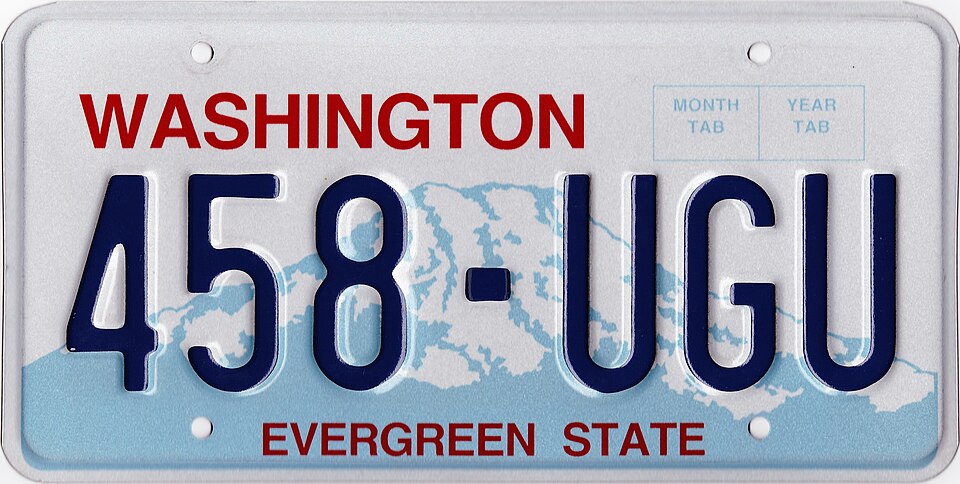
Washington standard passenger plates use three letters followed by four numbers, written as ABC1234. Checking the format first does two things: it catches typos before you pay for a search, and it tells you whether the plate in front of you is likely a standard issue or a specialty, personalized, or other format. Format checking is not a lookup. It is a sanity check on the string. If the plate you are reading has a different pattern, it may be a personalized plate, a specialty plate, a motorcycle plate, or a plate from another state. Personalized plates use their own character rules and may not follow the ABC1234 pattern at all, which is why a failed format check is a clue rather than a conclusion.
Look at both ends of the car
Washington requires front and rear plates on most vehicles. If you are reading a plate in a parking lot, check the front as well, because the rear plate may be obscured by a bike rack, dirt, or a dealer frame. Our guide to the Department of Licensing covers which vehicles must display both and what counts as proper mounting.
Watch for frequent misreads
- 0 vs. O – Washington plates can contain both, so the position and font matter.
- 1 vs. I – another pair that looks identical at distance.
- 5 vs. S – easy to confuse on a dirty or angled plate.
- 8 vs. B – frequent on older, faded plates.
- Stickers and frames – a frame can hide a character and change what you think you saw.
If a search returns nothing, retype the plate with each ambiguous character swapped before you conclude the plate is invalid. Clean the plate and read it straight on, since a frame or road grime can hide a character and change what you think you saw. A plate that still returns nothing may belong to another state or use a special format, such as a personalized or motorcycle plate, rather than being unregistered.
The DOL Contracted Plate Search for businesses
Washington operates a Contracted Plate Search, formerly known as IVIPS, for qualified business and government users. This is the legitimate channel for organizations that need to match a plate, VIN, boat HIN, boat registration number, or registered owner name to a record. Access is not open. You need a License Express account and you need to meet DOL’s eligibility requirements. The program exists for users with a documented business or governmental purpose, and DOL decides who qualifies.
| Feature | Detail |
|---|---|
| Program name | Contracted Plate Search (formerly IVIPS) |
| Who can use it | Qualified business and government users |
| Search by | VIN, plate number, boat HIN, boat registration number, or registered owner name |
| Requirements | License Express account and eligibility approval |
| Available to the public | No |
Who it is for
The search is built for organizations that have a reason to run plate and vessel queries as part of their work, and that can show DOL they meet the eligibility standard. If you think you qualify, start with DOL rather than with a reseller. Third parties that offer “DOL access” are usually selling a convenience layer over public or commercial data, not actual DOL records.
What it is not
It is not a consumer background check on a driver. It is not a way to find out who cut you off on I-5. And it is not a loophole around the DPPA, because permitted-purpose rules still apply to the users who are approved.
Scams to avoid and misleading sites
The lookup category is full of overpromising. These patterns are worth recognising before you type a plate number into any site, because the cost is usually your data rather than your money.
“Free owner lookup”
The page promises a name and address for free. You enter a plate, wait through a progress bar, and get a teaser: a partial name, a city, or a “record found” message. Then a paywall appears. What you bought is usually vehicle data, sometimes nothing at all. The owner information was never available.
“Instant results” with no source
Legitimate vehicle data comes from somewhere identifiable: a state record, a manufacturer recall database, an insurance or title database. A site that shows a confident result with no source and no description of its coverage is guessing or recycling stale data.
Fake DOL pages
Lookalike sites imitate the Department of Licensing and ask you to sign in with your License Express credentials. DOL does not need your password to tell you whether a plate combination is available. If a page asks for credentials to run a free check, close it.
Payment for a “hold” on a plate
No third party can reserve a personalized combination for you. Only the state issues plates. A site that offers to hold characters is selling a service it cannot perform.
Data harvesting
Even a genuinely free tool can be a collection point. Ask what the site does with the plate numbers and personal details you enter. If there is no clear answer, do not enter them.
What to do instead
- Use the DOL availability checker for personalized plate questions.
- Use a reputable vehicle history provider, and prefer VIN over plate.
- Contact DOL directly for registration and title questions.
- Contact law enforcement if you are reporting an incident, not a website.
- Report a deceptive site to the Washington State Attorney General’s office.
Watch for sites that ask for a card before showing a result. A free lookup that suddenly needs payment details is a billing page wearing a search box. Read the terms before you type a plate number, and check whether the site says who supplies its data. A lookup service that cannot name its source is guessing, and a guess about a vehicle you are about to buy is worse than no answer.
Frequently asked questions
The questions below cover availability, approval, and the legal limit on owner data. Each answer points to the section that carries the detail, including the statute behind the limit.
Is there a free Washington license plate lookup?
Yes, for one purpose. The Department of Licensing’s free online checker tells you whether a personalized character combination is currently issued. No free public tool returns an owner name or address, whatever the ads promise.
Can I find out who owns a car by running the plate?
No. Names and addresses in motor vehicle records are protected by the federal Driver’s Privacy Protection Act, 18 U.S.C. 2721. Only permitted purposes, such as law enforcement, court proceedings, or approved business use, can reach that data.
What information can I get from a plate number?
Usually vehicle-level details: make, model, year, trim, engine, body style, open recalls, and sometimes title brands. Coverage varies by provider. None of it identifies the owner, and a plate-to-VIN match is not guaranteed.
Does the DOL checker guarantee my plate will be approved?
No. The checker only shows whether a combination is currently issued. It does not test language rules or reserved patterns, and DOL reviews the application separately before approving or rejecting it.
What is the Washington plate format?
Standard passenger plates use three letters followed by four numbers, written as ABC1234. Personalized plates follow their own character rules and may not match that pattern. A plate that fails the check can still be valid, so use the format as a clue.