Washington License Plate law answers a question drivers ask constantly: do you need a front license plate in Washington State? For nearly every passenger vehicle, the answer is yes. RCW 46.16A.200 requires both plates on the car when the state issues two. Motorcycles, trailers, campers, mopeds, collector vehicles, and horseless carriages get one rear plate. A plate on the dashboard does not count. Cars with no bracket still need one. Enforcement varies by city, yet the requirement itself is statewide.
Washington License Plate tickets for a missing front plate are a traffic infraction, not a criminal charge. The base penalty is modest, but court assessments are added on top. Officers can stop a car for that alone, yet many treat it as a secondary observation during another stop. Enforcement varies by city and by patrol priorities. Drivers moving from a one-plate state must register within 30 days of establishing residency, and the new registration brings two plates. Visitors keep their home state setup when passing through.
How to mount a front plate correctly
Washington does not publish a single diagram with exact inch measurements for every vehicle, because mounting points differ by model. What the law and enforcement practice both care about is that the plate is secure, visible, and legible.
What “correctly mounted” means in practice
- Attached to the vehicle — bolted to a bracket, bumper, or grille, not resting on a surface.
- Vertical or close to it — a plate lying flat on the hood or angled at the sky defeats the purpose.
- Unobstructed — no tow hook, winch, bike rack, or light bar covering any character.
- Both fasteners in place — a plate hanging from one screw rattles, bends, and eventually disappears.
- Not behind glass — windshield mounting does not count.
The four-screw question
Some vehicles have four mounting holes, some have two. Using all available fasteners is the safest approach: it prevents the plate from flapping at highway speed, which is the most frequent cause of a bent or lost front plate. The full range sits side by side on the Washington license plates home page. If your bracket has only two holes, add a plate frame with a backing or use nylon washers behind the plate to reduce vibration. A plate that has cracked around the screw holes is one pothole away from falling off.
After a car wash or a winter
Touchless car washes and pressure washers are the usual suspects when a front plate goes missing. Check the fasteners after washing, and check again after the first freeze — plastic brackets get brittle and crack. Brackets come from three places: the dealer parts counter, an auto parts store, and aftermarket sellers that make vehicle-specific mounts. A dealer bracket uses the factory mounting points and usually needs no drilling. Aftermarket mounts often attach through the tow hook or the lower grille, which keeps the bumper untouched. Whatever you buy, check that the plate sits level, that no character is hidden, and that the fasteners are stainless so they do not seize after a winter of road salt.
Official sources — Washington State DOL https://app.leg.wa.gov/rcw/default.aspx?cite=46.16A.200 https://dol.wa.gov/vehicles-and-boats/vehicles/license-plates
Is a front license plate in Washington State required?
| Question | Answer |
|---|---|
| Is a front plate required? | Yes, for most vehicles |
| Legal citation | RCW 46.16A.200 — two plates must be displayed front and rear |
| Vehicles with one plate only | Motorcycles, trailers, semi-trailers, campers, mopeds, collector vehicles, horseless carriages |
| Can it go on the dashboard? | No — it must be attached to the vehicle |
| Penalty | Traffic infraction; $48 base penalty plus statutory assessments |
| New residents | Register within 30 days of establishing residency |
| Front plate lost or damaged | Order a replacement from DOL |
What the law actually says
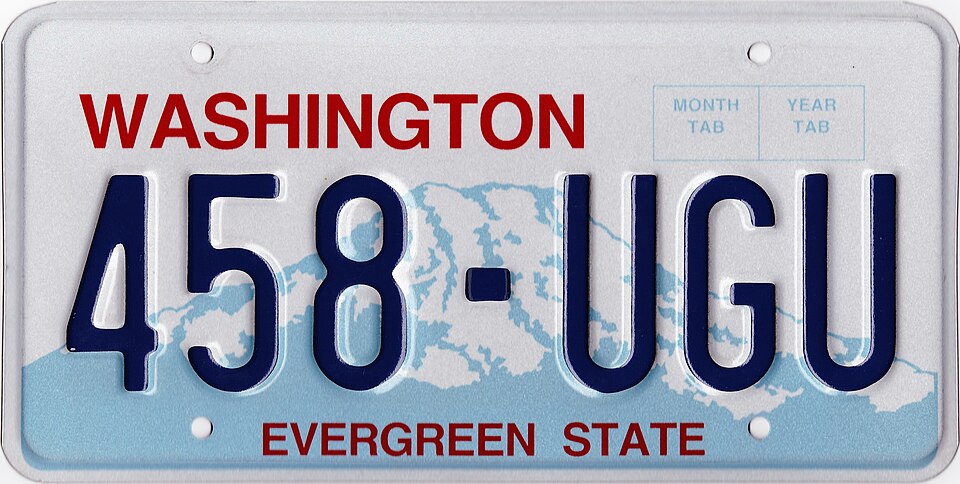
RCW 46.16A.200 governs how Washington plates are designed and displayed. The relevant rule is simple: when the state issues two plates, both must be on the vehicle — one at the front, one at the rear. Two details matter more than people expect. First, it is about how many plates were issued. Washington personalized plates still have to be mounted the same way, so the display rule does not change. If DOL issued two, you display two. You cannot decide that one looks better and leave the other in the trunk. Second, the plates must be attached, not carried. The law expects plates to be mounted to the vehicle in a position where they are visible and legible. A plate sitting on the dashboard or wedged behind the windshield does not satisfy the requirement.
Why Washington requires a front plate at all
The requirement is not decorative. Each reason below comes from a system that reads plates for a living, whether that system is a camera, a toll reader, or a witness at the side of the road.
Why the state wants a plate on the front
Roughly half of US states require only a rear plate. Washington is in the two-plate group, and the reasons are practical rather than decorative. Automated enforcement. Red light cameras, school bus cameras, and speed cameras photograph the rear of a vehicle as it passes, but toll systems and parking enforcement often capture the front. A front plate doubles the number of angles at which a vehicle can be identified.
Tolling, parking, and plate readers
Tolling. Good To Go! readers and toll-bridge cameras work best with plates on both ends. A missing front plate can mean a toll is billed manually, disputed, or treated as unpaid. Parking enforcement. Meter readers and parking patrols approach vehicles from the front. A rear-only plate forces the officer to walk around the car, which in practice means fewer citations and more disputes. License plate readers. Automated plate reader systems used by police and by private operators are mounted on patrol cars and fixed poles, and they capture whatever face of the vehicle is presented. Two plates give two chances to match.
Witness identification and the policy debate
Identification after the fact. Witnesses to a hit and run, a road rage incident, or a crime usually see the front of the vehicle as it approaches or passes. A front plate is often the only readable identifier they can provide. You can disagree with the policy — plenty of drivers do — but the rationale covers why the state has not repealed the requirement despite repeated legislative attempts.
Which Washington vehicles only need one plate
The exception list is short and specific. Everything outside it needs two plates, and the difference is decided by the vehicle class rather than by the owner or the county.
- Motorcycles
- Trailers and semi-trailers
- Campers
- Mopeds
- Collector vehicles (collector vehicle plates are displayed on the rear)
- Horseless carriages
Note the pattern: these are vehicles where a front mounting point does not exist or where the registration class is restricted. A collector vehicle, for example, displays its plate on the rear only — and if the owner uses a restored matched set, those may be shown front and rear. If you drive a normal passenger car, SUV, or pickup, none of these exceptions apply to you.
Can you put the front plate on the dashboard?
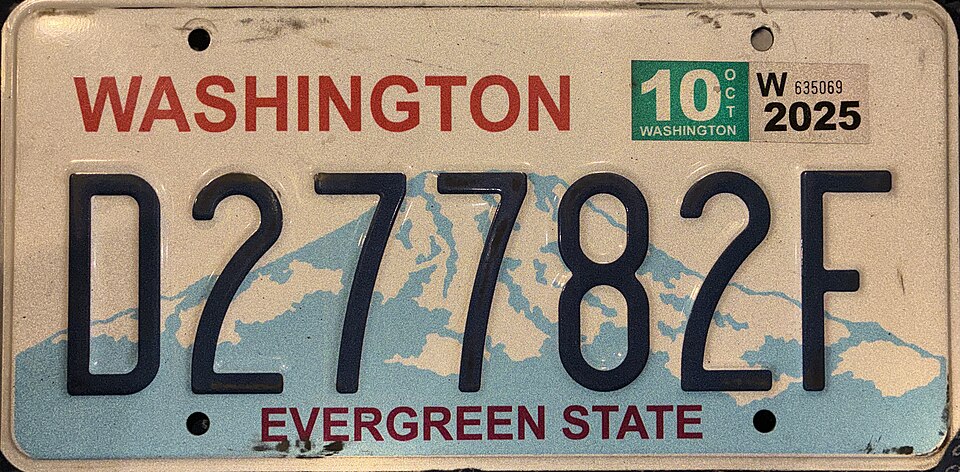
No. This is one of the most frequent workarounds people try, especially owners of sports cars who do not want to drill into the bumper, and it does not work. Washington requires plates to be displayed on the vehicle in a way that is visible and identifiable. A black throwback plate follows the same two-plate rule as the standard design. A plate on the dashboard is not attached to the front of the vehicle, is frequently obscured by reflections on the windshield, and is not readable from the front at the angles a plate is meant to be read. If you are stopped and the officer sees the plate inside the car rather than mounted on the bumper, you can still be cited. The plate technically exists, but it is not displayed as required.
What if your car has no front mounting bracket?
Some vehicles — certain sports cars, some imported models, and cars with aftermarket bumpers — do not come with a front plate bracket. That is a hardware problem, not a legal exemption. Options that keep you compliant without drilling visible holes:
- OEM bracket: many manufacturers sell a front plate bracket that mounts to existing tow hook or grille points.
- Tow hook mount: a plate holder that threads into the tow hook receiver, removable when you want a clean look.
- Under-bumper or grille mount: brackets that clamp rather than drill.
- Adhesive or suction mounts: generally not recommended — they fail at speed and in heat, and a fallen plate is a second problem.
Whatever you choose, the plate must be readable from the front and not blocked by the bumper, a frame, or accessories.
Frames, covers, and tinted shields
Plate frames are legal. Plate covers are where people get into trouble. Washington requires plates to be legible and clearly identifiable. A tinted, smoked, or reflective cover that reduces readability — particularly one that defeats red light cameras or toll cameras — creates a separate problem even if the plate underneath is valid. Practical rules:
- A plain frame that does not overlap the characters is fine.
- A frame that covers the state name, the registration stickers, or any character is not.
- A tinted or frosted cover that obscures the plate is not.
- Anything designed to change or hide the plate’s appearance is illegal.
Washington also specifically prohibits license plate flipping devices and technology that changes the appearance of a plate (RCW 46. Vehicles with collector vehicle plates are among the few classes that receive only one plate. 37.685). That law was aimed at devices sold as “camera defeat” gadgets.
What is the penalty for no front plate in Washington?
Driving without a required front plate is a traffic infraction. It is not a criminal offense and it does not add points to your driving record the way a moving violation does. Under the state’s monetary penalty schedule, infractions that are not specifically listed carry a $48 base penalty, plus statutory assessments added by the court. The total you pay is higher than the base figure. Two practical notes:
- The fine is smaller than most people assume, which is part of why enforcement is inconsistent.
- The bigger risk is being stopped for the missing plate and then having an officer notice something else — expired tabs, no insurance, a suspended license.
Why enforcement feels random
Washington law is clear, but enforcement is not uniform. In practice, a missing front plate is often treated as a secondary observation: an officer stops a car for speeding or a broken taillight, then notes the missing plate and adds it to the citation. That does not make it optional. It means the odds of being cited depend heavily on where you drive and how you otherwise behave on the road. Plenty of Washington drivers go years without a front plate and never get stopped. Plenty of others get cited within a month. City departments with traffic units tend to enforce it more consistently than rural agencies, and enforcement often spikes during emphasis patrols and around major events. For a plate that costs nothing extra and takes ten minutes to install, the risk-reward calculation is not close.
Moving to Washington from another state
A move brings a deadline, and the deadline is measured from residency rather than from the drive across the border. That distinction decides whether a driver is early, on time, or already late.
Registering within 30 days
If you establish residency in Washington, you must register your vehicle within 30 days. That registration comes with Washington plates — both of them, front and rear. Until you register, your out-of-state plates remain valid under your previous state’s rules. If your previous state did not require a front plate (and several do not), you are only required to follow Washington’s two-plate rule once your vehicle is registered here.
The habit that produces citations
A frequent sequence: someone moves from a one-plate state, keeps their old plates for a few months, then registers and installs only the rear Washington plate out of habit. That is when the citation happens. The 30-day window starts when residency is established rather than when the car crosses the border, so a driver who keeps out-of-state plates for a few months is already past the deadline once the move becomes permanent. Because a Washington registration delivers two plates at once, mounting only the rear one leaves the vehicle out of compliance on the very day the new set goes on, and that single habit covers a large share of the front plate citations written to new residents. Buying a front bracket when you register keeps both stages on one schedule, and a bracket costs a fraction of the citation a missing plate adds to the bill.
What about out-of-state visitors?
Visitors do not need to add a front plate. If your vehicle is properly registered in another state and you are visiting, working temporarily, or passing through, Washington honors your home state’s plate configuration. A car registered in Oregon or Arizona — both one-plate states — can legally drive in Washington with a rear plate only, because the vehicle is not registered here.
When the exemption ends
- You establish residency. Once you are a Washington resident, you have 30 days to register, and registration brings two plates.
- You take a job and relocate. Working in Washington temporarily is different from moving here. The test is residency, not employment.
- You buy a vehicle here. A vehicle purchased and registered in Washington gets Washington plates, both of them.
Active-duty military members stationed in Washington may be able to keep their home-state registration and plates under federal protections. The rules depend on the state of registration, so confirm before you assume the exemption applies to you.
Lost, stolen, or damaged front plate
If your front plate is lost, stolen, or damaged, order a replacement rather than driving without one. Washington allows you to replace plates and tabs online, by mail, or at a vehicle licensing office. Until the replacement arrives, a damaged but legible plate is better than no plate, but a plate that is bent enough to obscure characters is a legitimate reason to be stopped. If the plate was stolen, report it. A stolen plate attached to another vehicle can generate tolls, camera tickets, and even crimes in your name.
Collector cars, classics, and modified vehicles
Collector vehicle plates are displayed on the rear only, so a collector-registered car does not need a front plate. If the owner supplies a restored matched set of original-year plates, those may be displayed on both front and rear. For modified cars and customs, the requirement depends on the registration category, not the build. A heavily modified car on standard registration still needs both plates. A collector-registered car follows collector display rules. If you are unsure which category your vehicle falls into — especially with a custom or replica build — confirm with a vehicle licensing office before you decide how many plates to mount.
Myths about the front plate rule
“It’s a secondary offense, so it’s optional.” It is not optional. It is a primary infraction that officers often choose not to enforce on its own. “I can keep it in the window if the car has no bracket.” No. It must be attached to the vehicle. “My dealer said the car doesn’t need one.” Dealers are describing the bumper, not the law. Buy a bracket. “Out-of-state plates are exempt forever.” Only until you establish residency and register here — then 30 days. “A tinted cover protects the plate.” It protects it from being read, which is the problem. “The law only requires one plate.” The law requires as many plates as the state issued, displayed front and rear. “Motorcycles have front plates too.” No. Motorcycles receive a single rear plate.
Frequently asked questions
The questions below cover the rule, the exceptions, the penalty, and the mounting detail that new residents ask about first. Each answer is short and points to the paragraph that carries the detail.
Is a front license plate required in Washington state?
Yes. RCW 46.16A.200 requires both plates on the vehicle whenever the state issues two. One goes on the front and one on the rear. Passenger cars, SUVs, and pickups all fall under the rule.
What happens if I don’t have a front license plate in Washington?
Driving without a required front plate is a traffic infraction. The base penalty is $48 plus statutory assessments added by the court. It is not a criminal charge and adds no points to your driving record.
Can I display my front plate on the dashboard?
No. The plate has to be attached to the vehicle in a position where it is visible and readable from the front. A plate on the dashboard or behind the windshield does not meet the requirement.
Do all vehicles in Washington need two plates?
No. Motorcycles, trailers, semi-trailers, campers, mopeds, collector vehicles, and horseless carriages receive a single plate and display it on the rear. Normal passenger cars, SUVs, and pickups do not qualify for those exceptions.
Do I need a front plate if my car has no mounting bracket?
Yes. A missing bracket is a hardware problem, not a legal exemption. OEM brackets, tow hook mounts, and clamp-on grille mounts keep the plate secure without drilling into the bumper.